

Blog
What is a Terminal Degree?


A terminal degree is the highest level of college degree available in a particular field. A terminal degree is the highest academic degree or academic credential attainable in a specific academic discipline or professional field. In most fields, the highest possible academic credential that can be earned is a doctoral degree, which is considered the highest academic degree or highest degree in that discipline. Doctoral degrees are available in almost any field of study offered at a four-year college or university. To earn a doctoral degree, most students must complete many years of schooling starting with a bachelor’s degree, which is typically required before pursuing advanced degrees, followed by two to three years of study in a master’s degree or professional degree program. In some terminal degree programs, a master’s degree may be required before admission. Doctoral programs typically require additional years of schooling, for a total of 7 to 9 years spent in graduate degree programs. Doctorate degrees are considered a terminal degree in most academic disciplines, and academic doctorates such as the PhD are awarded for original research and scholarship. Doctoral degrees generally require the completion of a doctoral thesis; a lengthy research paper that represents the doctoral student’s original work, and students must conduct research as part of earning an academic doctorate.
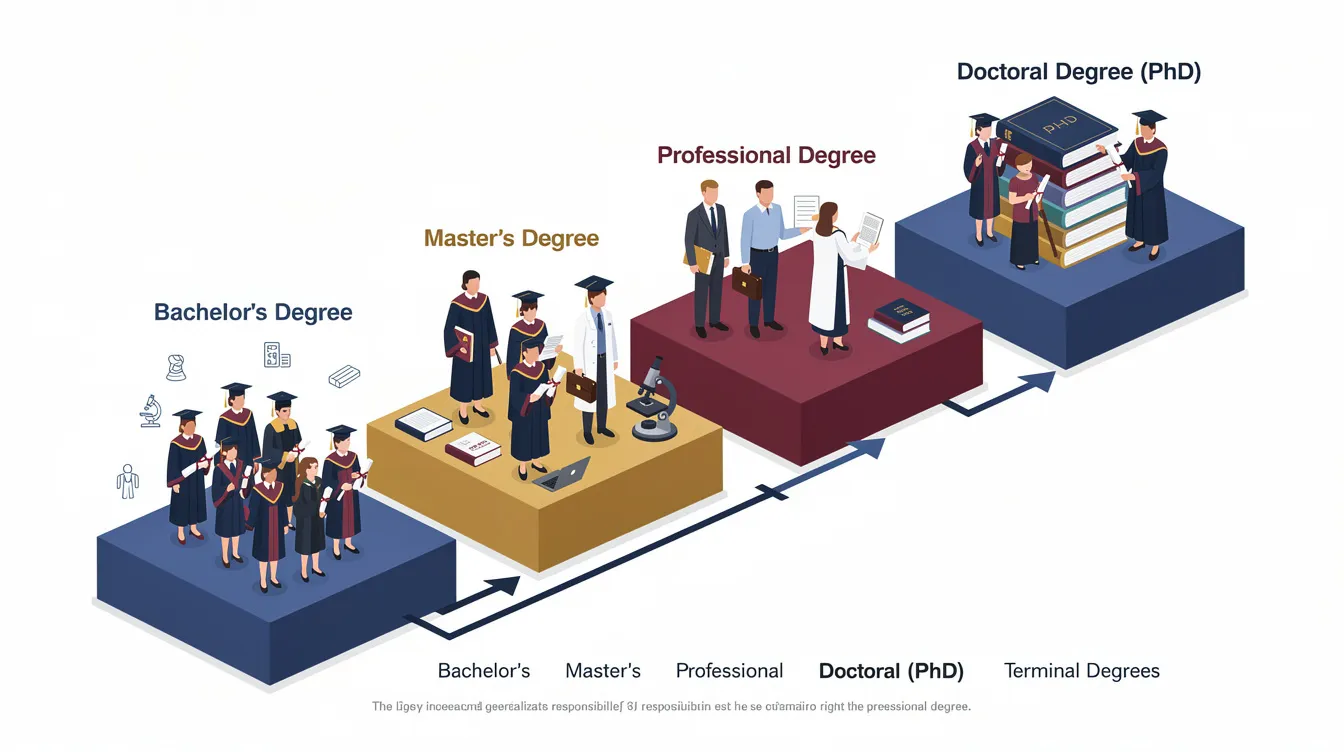
Caption: Understanding the levels of education from bachelor’s to terminal degrees.
What About Professional Degrees?
A professional degree is a degree in any field of study that provides specific training in a line of work that requires specific credentials in order to become employed in that field. Some examples of professional degrees are medical, nursing, legal, accounting, education, and social work degrees. Some of these fields – like medicine, for example – require a terminal degree for clinical practice. Terminal professional degrees, such as the Doctor of Dental Medicine (DMD), Doctor of Dental Surgery (DDS), and Doctor of Nursing Practice (DNP), are required for clinical practice in fields like dental medicine and nursing practice. In many professional disciplines, a professional doctorate is a terminal credential, distinguishing it from academic doctorates. In some fields, a professional degree can also be a terminal degree. For example, for the practice of law in the United States, the Juris Doctor is both a professional degree and a terminal degree.

Caption: Various professional disciplines where terminal degrees are essential.
Is a Ph.D. the Only Kind of Terminal Degree?
Ph.D. stands for “Doctor of Philosophy”, and is the most common type of terminal degree. The Ph.D. is granted in a variety of professional, scientific, and liberal arts fields. Doctorate level degrees are the highest degree in many fields, including the social sciences and philosophy degree programs. Medical doctors by definition earn a doctoral degree. The title of M.D. stands for “Doctor of Medicine.” Attorneys earn a Juris Doctor degree (J.D.). While these professional degrees are also terminal degrees required for clinical and professional practice, people in these fields may earn a research-based Ph.D. as well. For example, in the case of a medical doctor who earns both an M.D. and a Ph.D., both of these degrees are considered terminal degrees in the field of medicine. However, the M.D. is a terminal degree in the clinical practice of medicine, whereas the Ph.D. is a terminal degree for research and teaching. The Doctor of Education (EdD) is considered a terminal degree in education, focusing on leadership and administration in higher education. MFA programs are terminal master’s degree programs in the fine arts, and in some fields, a terminal master’s is the highest academic degree available.
Why Earn a Terminal Degree?
There are a variety of reasons why people choose to earn a terminal degree in a particular field. The Ph.D. is often the standard for a college or university professorship, so one who is considering a career as a college professor may choose to earn a Ph.D. Indeed, the word “doctorate” is a shortened version of the Latin term “licentia docendi,” or “license to teach.” Pursuing a career in teaching at the college level is one of the primary reasons for pursing a terminal degree. Earning a terminal degree is often required for faculty positions in higher education and for professional credibility in a particular professional discipline. Terminal degree online programs are increasingly available, allowing students to pursue advanced education remotely. Sometimes career professionals earn a Ph.D. in order to pursue a career change. For example, a lawyer who does not want to continue to practice of law may wish to teach law school or perform policy research at a university or other organization. A Ph.D. might increase a lawyer’s chances of making this type of a career change. There is a distinction between terminal master’s degrees and non terminal master’s degrees: a terminal master’s degree is the highest degree in its field, while a non terminal master’s degree may lead to further study at the doctorate level. Earning the highest academic degree or terminal credential in a field can open doors to leadership roles and advanced career opportunities. In other cases, a love of learning is the primary motivation for those to wish to earn a terminal degree.
Requirements for Terminal Degrees
Earning a terminal degree is a significant academic achievement that demands dedication, perseverance, and a strong commitment to advanced education. The specific requirements for terminal degree programs can vary widely depending on the academic discipline, educational institution, and the type of degree being pursued. Generally, students interested in terminal degrees must first demonstrate a solid academic foundation, often holding a bachelor’s or master’s degree in a related field before applying to advanced degree programs.
For many terminal degree programs—especially those leading to doctoral degrees—applicants may need to complete standardized entrance exams such as the GRE or GMAT. These assessments help ensure that students possess the analytical and critical thinking skills necessary for success in rigorous academic studies. Once admitted, students typically undertake a substantial number of credit hours, which may range from 30 to 60 or more, depending on the program and field of study.
A hallmark of most doctoral programs is the requirement to conduct original research, culminating in a dissertation or thesis. This extensive research project allows students to contribute new knowledge to their field and demonstrates their expertise in research methodologies and problem-solving. In addition to research, many terminal degree programs require students to pass comprehensive exams that test their mastery of the subject matter.
In professional fields such as law, medicine, or veterinary medicine, terminal degree programs often include practical components like clinical rotations, internships, or residencies. These hands-on experiences are essential for developing the real-world skills and competencies needed for professional practice and leadership roles. For example, a Doctor of Business Administration (DBA) program may require several years of relevant work experience prior to admission, ensuring that students bring valuable industry insights to their advanced studies.

Caption: Graduate student engaged in original research for a terminal degree dissertation.
It’s important to note that not all terminal degrees are doctoral degrees. In certain fields—such as fine arts, creative writing, or library science—a master’s degree, like the Master of Fine Arts (MFA) or Master of Library and Information Science (MLIS), is considered the highest academic credential and thus a terminal degree. These terminal master’s degree programs often emphasize advanced creative or professional practice rather than original research.
Recognizing the needs of working professionals, many educational institutions now offer terminal degree programs online or in flexible, part-time formats. This allows students to balance their studies with career and personal commitments while still pursuing advanced education and career advancement.
The benefits of earning a terminal degree extend beyond academic achievement. According to labor statistics, individuals with terminal degrees—especially those with doctoral or professional doctorates—often enjoy greater career opportunities, higher salaries, and access to executive roles in their fields. Whether your career goals involve conducting research, teaching at the university level, or advancing to leadership positions in business administration or the performing arts, completing a terminal degree program can open doors and enhance your professional credibility.
By understanding the diverse requirements and opportunities associated with terminal degrees, students can make informed decisions about their educational paths and position themselves for long-term success in their chosen fields.
Ready to add a touch of fun and authenticity to your collection?
Order your custom novelty diploma, degree, or certificate today at PhonyDiploma.com! Whether it’s for a unique gift, a memorable reunion, or just for entertainment, our high-quality replicas with raised seals and realistic paper will impress everyone. Browse our catalog now and get your perfect decorative document delivered right to your door—because sometimes, a little novelty goes a long way!