

Blog
Percentage of Americans With College Degree


When discussing the percentage of Americans with a college degree, it’s important to clarify the scope of the data. Most official statistics focus on adults aged 25 and older, as this group is more likely to have completed their formal education. Some reports may also include adults 18 and older or specifically working-age adults between 25 and 64.
This article is intended for students, educators, policymakers, and the general public who are interested in understanding trends in educational attainment. For students and educators, these statistics provide context for academic and career planning. Policymakers can use this data to inform decisions about education funding and workforce development, while the general public can better understand how education impacts economic opportunity and social mobility.
Overall educational attainment is a key measure used to assess the education level of the U.S. population. The statistics and trends discussed in this article are based on educational attainment data from sources such as the U.S. Census Bureau and the American Community Survey, which provide detailed insights into education levels across different demographics and regions.
A ‘college degree’ in this context includes associate, bachelor’s, master’s, and doctoral degrees, as well as high-value postsecondary certificates. As of 2024–2025, approximately 47.1% to 54.9% of working-age Americans hold a college degree (associate or higher) or high-value postsecondary certificate. The percentage of adults 25 and older with at least a bachelor’s degree is roughly 40%. Overall, educational attainment is one of the primary indicators of social class in the United States.
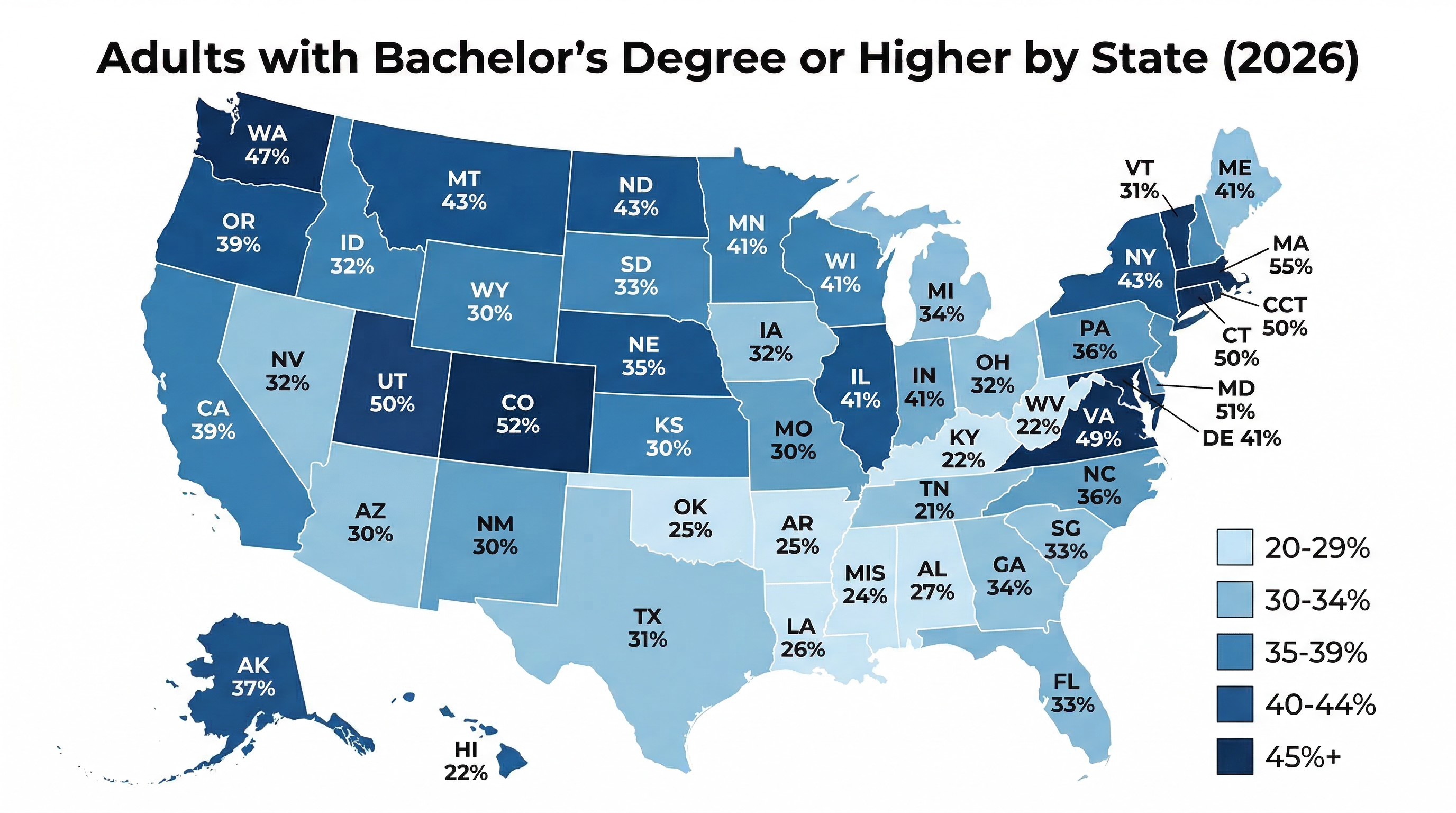
Caption: Map showing the percentage of adults aged 25 and older with a bachelor’s degree or higher across U.S. states in 2024.
Executive Summary: Bachelor’s Degree Or Higher
Before diving into the numbers, it’s important to clarify what is meant by ‘college degree.’ This term encompasses associate, bachelor’s, master’s, and doctoral degrees, as well as high-value postsecondary certificates. As of 2024–2025, approximately 47.1% to 54.9% of working-age Americans hold a college degree (associate or higher) or high-value postsecondary certificate. The percentage of adults 25 and older with at least a bachelor’s degree is roughly 40%. Approximately 38.7% of Americans aged 25 and older hold a bachelor’s degree or higher as of 2024.
As of 2024, the national average percentage of Americans aged 25 and older with at least a bachelor’s degree or higher is approximately 38.7%, or roughly 40%. This means that nearly two out of every five adults in the U.S. now hold a bachelor’s degree. The share of Americans with a bachelor’s degree or higher has reached record levels, reflecting decades of investment in higher education. This upward trend highlights ongoing progress in educational attainment and underscores the growing importance of higher education in the United States.
Caption: Trends in 4-year and 6-year college graduation rates in the United States from 1996 to 2024.
Alt text: Line chart displaying U.S. college graduation rates over time from 1996 to 2026.
National Attainment Among American Adults (College Degree Breakdown)
When examining the percentage of Americans with a college degree, it’s important to consider the different degree types, including associate’s, bachelor’s, master’s, and doctoral degrees. As of 2022, the degree attainment rate for working-age adults (25 to 64 years old) rose from 45.7 percent in 2021 to 46.5 percent in 2022. The national education attainment rate among adults in this age group reached 54.3 percent in 2022.
Below is a table summarizing degree attainment rates by year and degree type:
|
Year |
Percentage with Postsecondary Degree or Credential of Value |
Percentage with at least Associate Degree |
Degree Attainment Rate for Working-Age Adults |
Notes on Degree Types |
|---|---|---|---|---|
|
2002 |
– |
35% |
– |
Associate’s, Bachelor’s, Master’s, Doctoral |
|
2021 |
– |
– |
45.7% |
|
|
2022 |
54.3% |
Over 48% |
46.5% |
Includes associate’s, bachelor’s, master’s, doctoral degrees, and short-term credentials of value |
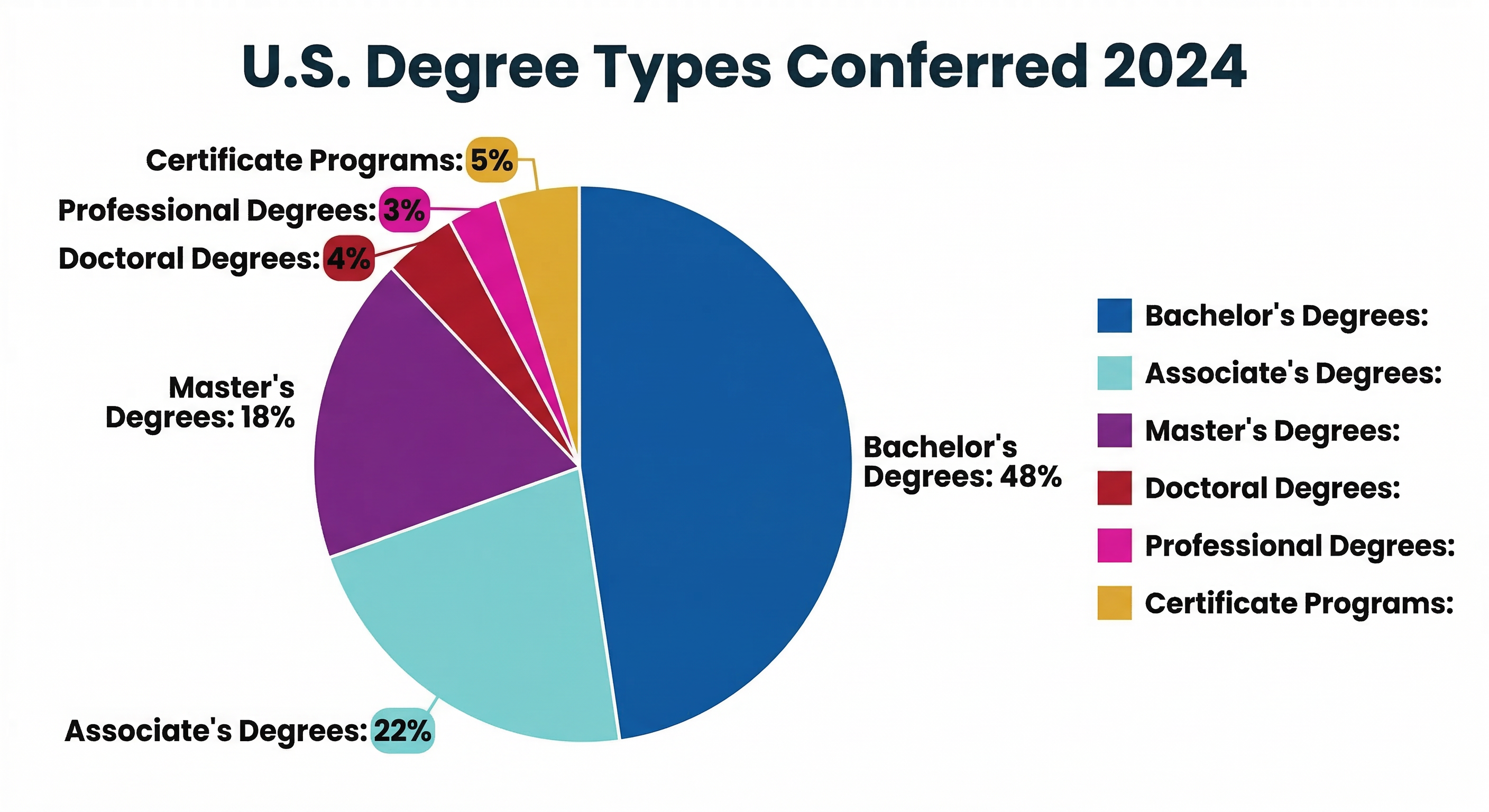
Caption: Distribution of associate’s, bachelor’s, master’s, and doctoral degrees conferred in U.S. postsecondary institutions in 2024.
At the bachelor’s level, completion of a bachelor’s program remains a standard postsecondary degree milestone. In 2022, a substantial portion of adults held a bachelor’s degree or higher, while others completed associate’s, master’s, or doctoral degrees. The bachelor’s program is a key indicator of educational achievement and is widely recognized for its impact on workforce participation and economic outcomes.
For those without a college degree, a notable percentage of adults have only a high school diploma, while a smaller group has no high school credential.
Degrees Conferred And Annual College Graduates
In 2024, over 4.7 million students are expected to graduate from U.S. colleges, nearly doubling the number of graduates since the early 2000s. Of these, a significant portion are bachelor’s degrees conferred, which remain the most common undergraduate credential. Business majors represent the largest share among recent bachelor’s degree graduates, reflecting ongoing demand in the job market and the popularity of business-related fields in postsecondary education.
In the 2015/2016 academic year, women earned 61% of associate degrees, 57% of bachelor’s degrees, 59% of master’s degrees, and 53% of doctorates, highlighting the increasing representation of women across all levels of higher education.
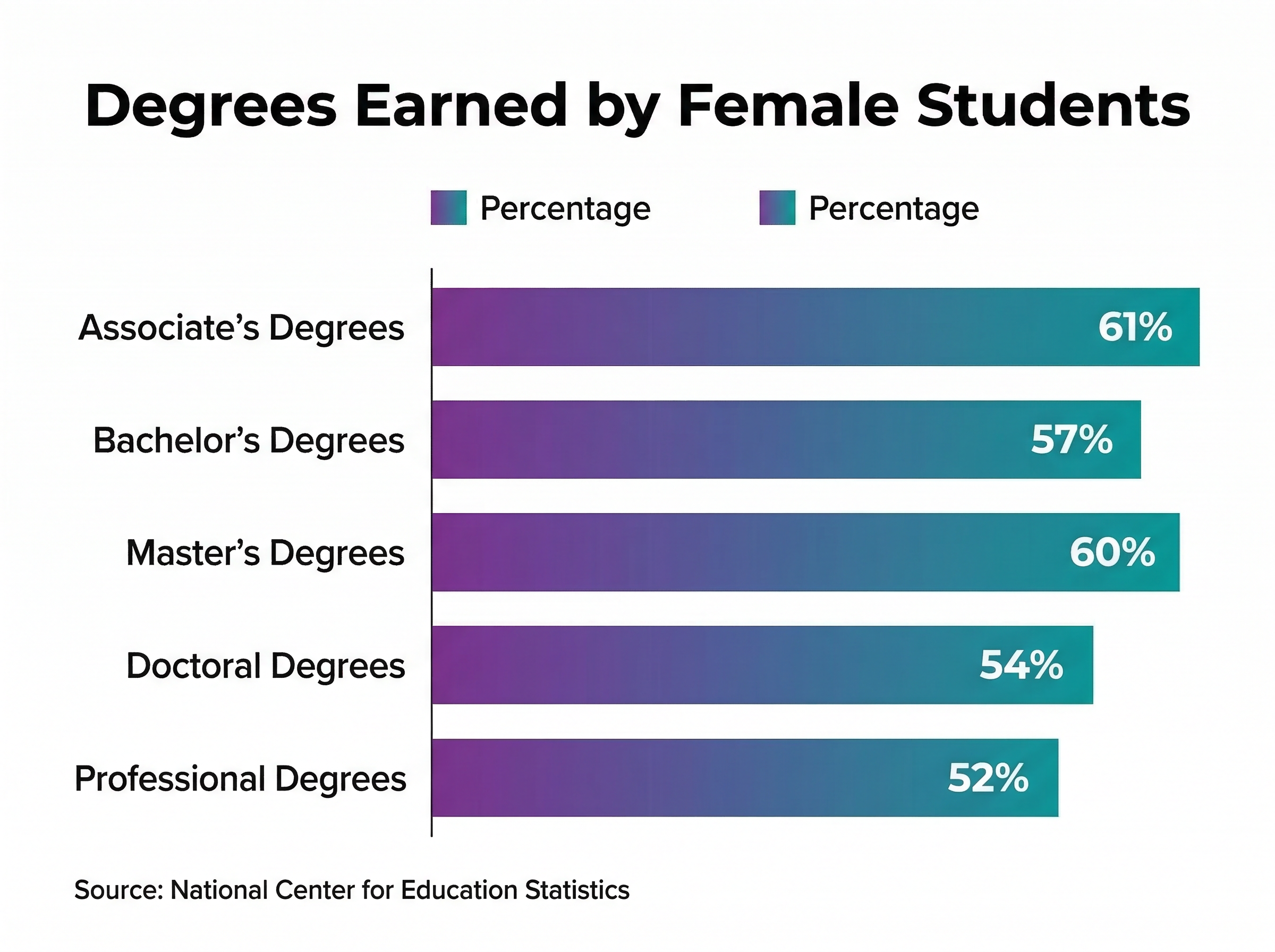
Caption: Percentage of degrees earned by female students across associate, bachelor’s, master’s, and doctoral levels.
College Students, Enrollment, And Retention Trends
According to the latest data, total college student enrollment in the United States was approximately 19 million in 2023, reflecting a slight increase from the previous year, with many institutions in major states like New York conferring large numbers of high school and college diplomas and transcripts each year.
When looking at enrollment by age cohorts, younger adults remain a key demographic actively pursuing higher education. The majority of enrolled students are between the ages of 18 and 24, highlighting that younger adults are not only seeking degrees but also entering the workforce with higher educational attainment. This trend underscores the importance of college education for younger adults in gaining employment and improving labor market outcomes.
Enrollment by attendance status shows that about 60% of students attend college full-time, while the remaining 40% are part-time students.
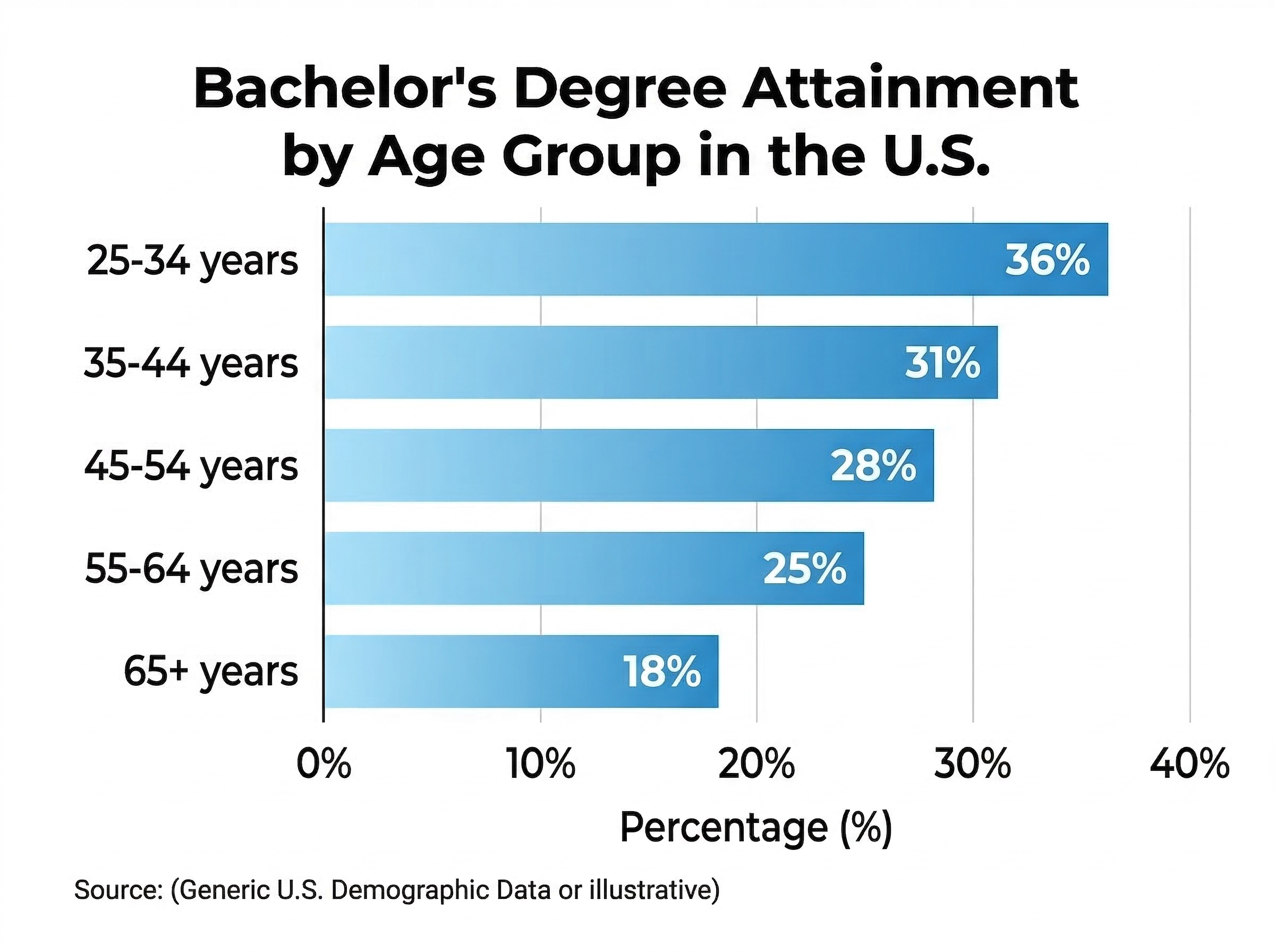
Caption: Comparison of bachelor’s degree attainment among different age cohorts, highlighting higher rates among younger adults.
College Graduation Rates And Retention
According to the latest data, the national 4-year college graduation rate in the United States is approximately 45%. When looking at the 6-year college graduation rate, which is a widely recognized indicator of academic achievement, the average reached 63.6% for students who entered college in 2017. This marks a significant increase from the 55.4% rate for the 1996 entry year, reflecting improvements in academic achievement over time.
Recent trends also show that college retention rates have remained steady or improved slightly, suggesting that more students are persisting in their studies and ultimately earning degrees. These graduation and retention rates are important measures of academic achievement and provide insight into the progress and challenges within higher education in the United States.
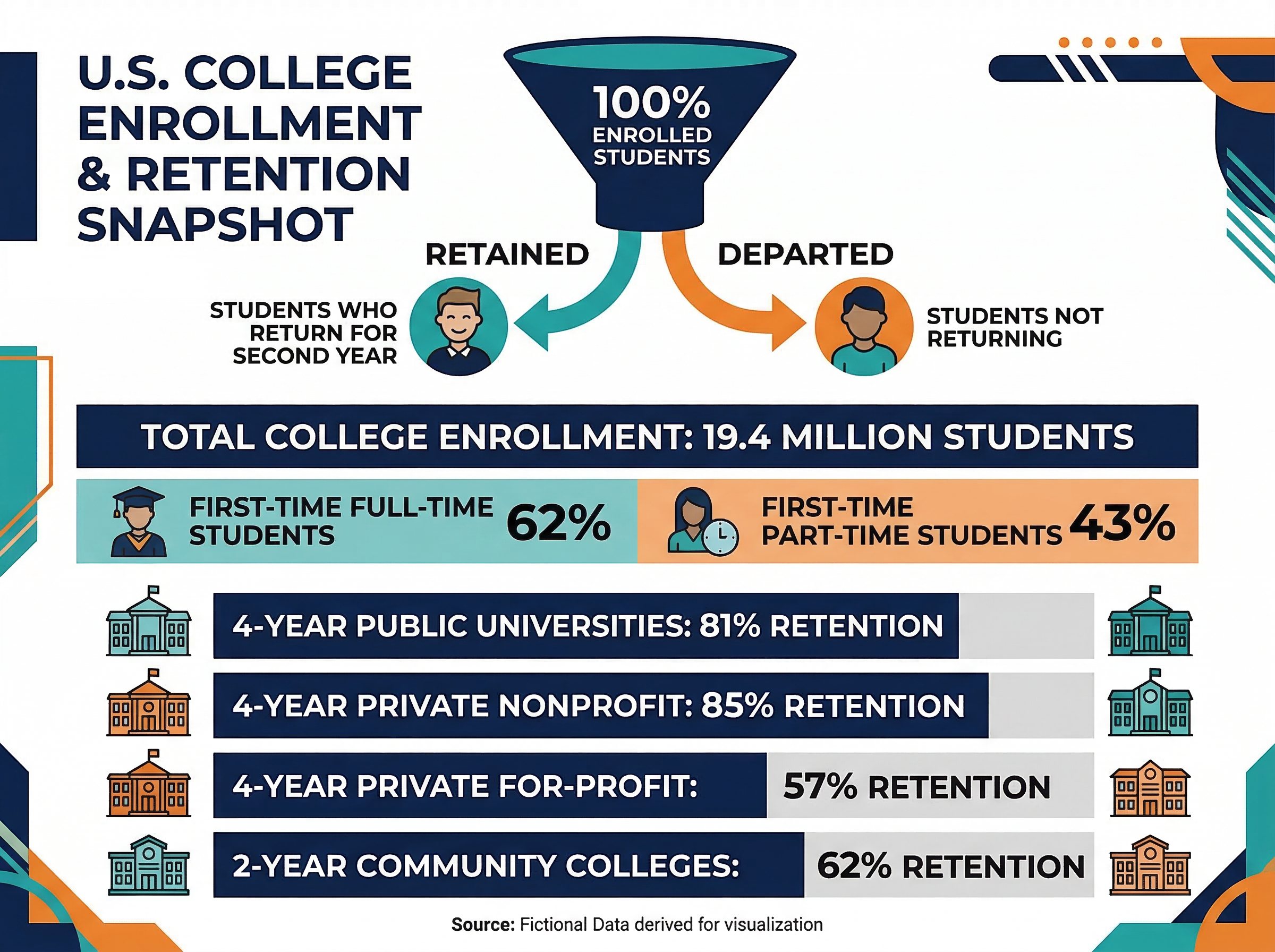
Caption: Overview of college enrollment by attendance status and retention rates for first-year students in recent academic years.
Graduate And Advanced Degree Holders (Master’s And Doctoral Degrees)
According to the latest U.S. Census Bureau data, about 14.4% of American adults aged 25 and older have earned a master’s degree. When looking at gender, women hold more master’s degrees (14.7 million) than men (11.2 million), reflecting a significant shift in higher education attainment.
In terms of doctoral degrees, approximately 2.1% of adults have achieved a doctoral degree, representing the highest doctoral level of academic attainment. There are notable gender differences at the doctoral level, with men still slightly outnumbering women, though the gap has narrowed in recent years.
Overall, the share of adults with graduate degrees—which includes master’s, doctoral, and professional degrees—has steadily increased over the past two decades. This growth in graduate degree attainment highlights the rising importance of advanced education in the workforce and the expanding opportunities for those with higher-level credentials.
Professional degrees, such as those in law and medicine, make up a smaller but significant portion of graduate degrees conferred each year, further contributing to the overall trend of increasing advanced degree attainment among Americans, and many students pursue a wide array of degrees and majors across business, STEM, and social science fields.
Bachelor’s Degrees: Majors, STEM Share, And Outcomes
The top fields for bachelor’s degrees conferred in the United States include business, health professions, social sciences, psychology, and engineering. STEM fields—science, technology, engineering, and mathematics—account for a significant share of bachelor’s degrees, with engineering and biological sciences among the most popular STEM majors.
When considering major choices and median earnings, it’s important to note that holding a four year college degree is a key factor in achieving higher income and better employment opportunities. There is a significant average income difference between those who have completed some college or hold an associate degree and those who have earned a bachelor’s degree. In fact, young adults with a bachelor’s degree—a four year college degree—earn a median income of $52,000, compared to $30,000 for those with only a high school diploma. This earnings gap highlights the economic value of completing a four year college degree, especially in high-demand fields such as STEM.
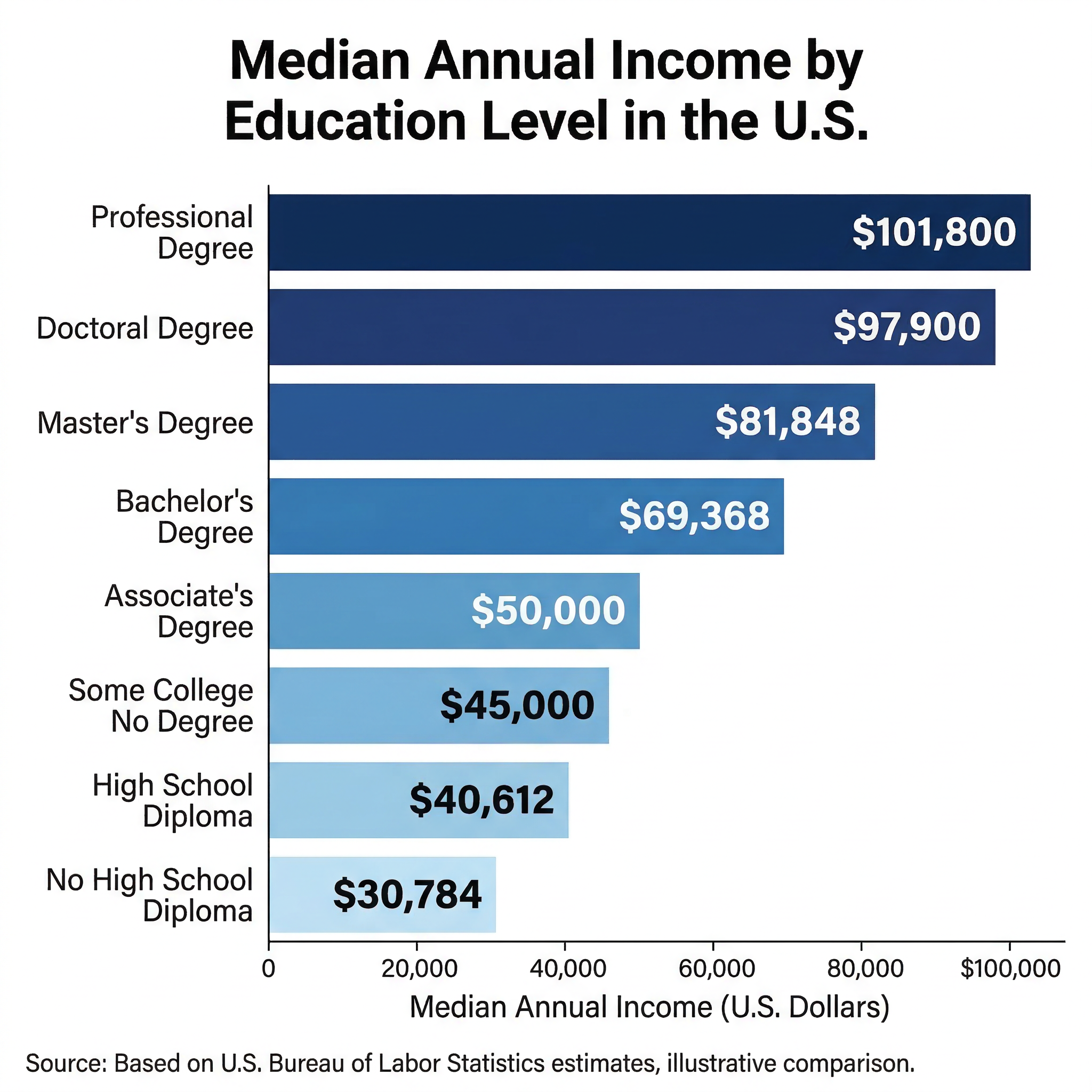
Caption: Median annual income comparison between adults with a high school diploma, associate degree, bachelor’s degree, and graduate degrees.
Demographic Breakdown Among College Graduates
By Age Cohort
Educational attainment varies by age. Approximately 42.8% of Americans aged 25 to 39 hold at least a bachelor’s degree, compared to 34.2% of those 55 and older. This reflects a steady increase in college completion rates among younger generations.
By Race and Ethnicity
There are significant disparities in educational attainment among different racial and ethnic groups. Asian adults have the highest attainment rates, with 59.3% to 61% holding a bachelor’s degree or higher. In comparison, Native American adults have the lowest college degree attainment, at roughly 26.5%. The proportion of college graduates is also greater among Asian Americans (49.8%) than among non-Hispanic whites (30%). Black Americans continue to face persistent gaps in post-secondary education levels, with the educational attainment gap between African Americans and non-Hispanic whites narrowing over time but remaining significant, especially at the bachelor’s degree level. Hispanic and Latino adults had a post-high school educational attainment rate of 29.5% in 2022, which is below the national average. Additionally, the educational attainment of foreign-born Hispanics is lower than that of the native population, contributing to the overall lower attainment levels among Hispanics.
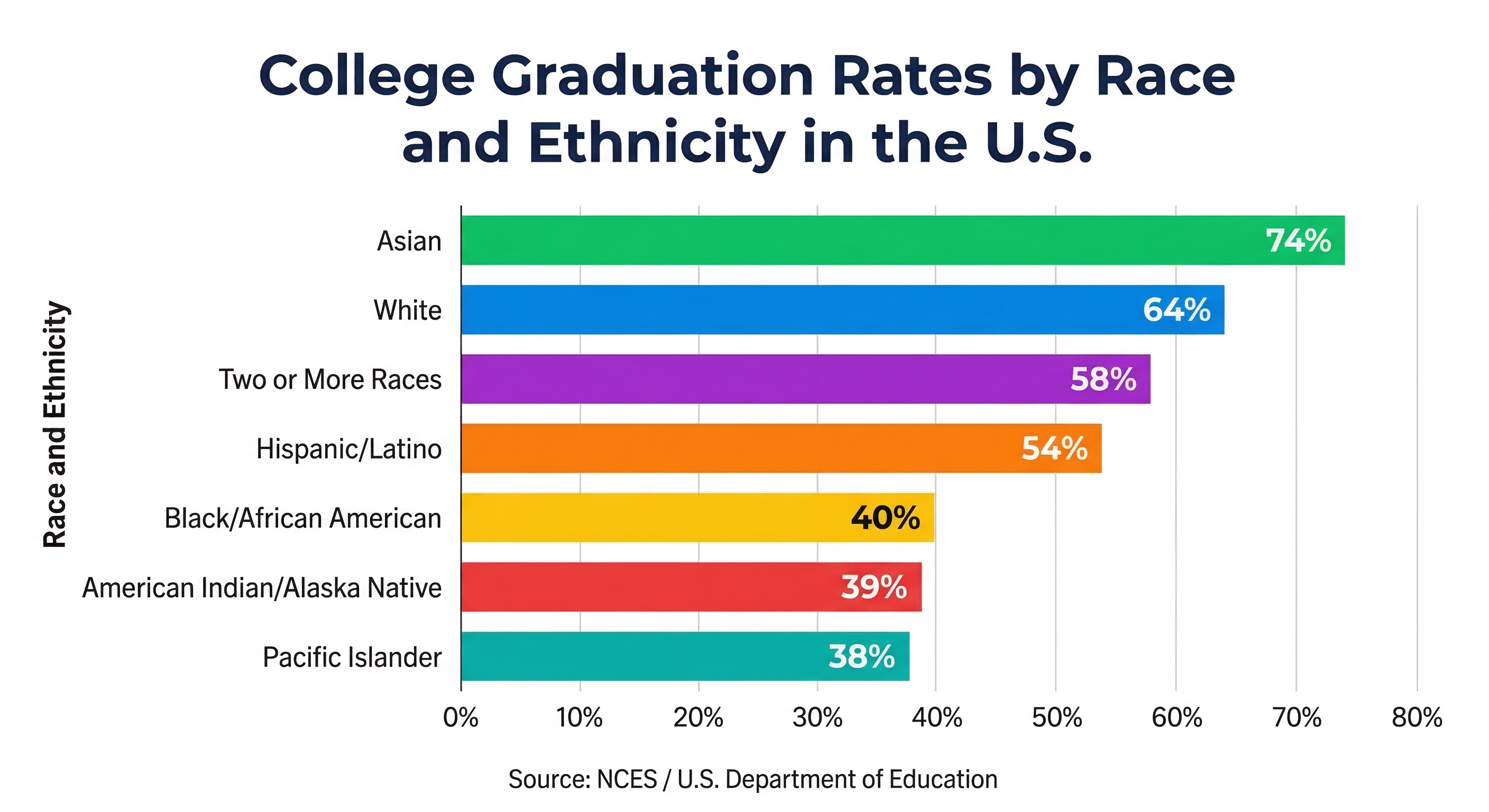
Caption: Graduation rates for major racial and ethnic groups in the U.S., illustrating disparities and progress.
By Gender
Women have surpassed men in college completion rates in recent years. This trend is evident across most racial and ethnic groups, reflecting broader changes in educational and workforce participation.
Urban vs. Rural Attainment Gaps
Urban areas generally report higher rates of college degree attainment compared to rural regions. Access to educational resources, economic opportunities, and population density all contribute to these differences.
High School Education and Social Class
Nearly 90% of all adults aged 25 years or older reported in 2018 that they had completed at least high school or obtained a GED, making them a ‘high school graduate.’ High school education remains a foundational level of academic achievement and is critical for further educational and economic opportunities. Educational attainment is one of the top assessments of social class in the United States. Education is a major key in becoming a more privileged member of the American middle class, with higher educational attainment serving as the main requirement for entering the professions and joining the professional middle class.
College Graduation Rates By Race And Gender
Graduation rates in the United States show significant variation by both race and gender. The table below provides a comparison of graduation rates by major racial groups and by gender:
|
Group |
Graduation Rate (%) |
|---|---|
|
Asian Students |
60.9 |
|
White Students |
[Insert Rate] |
|
Black Students |
[Insert Rate] |
|
Hispanic Students |
[Insert Rate] |
|
Women (Bachelor’s) |
59.1 |
|
Men (Bachelor’s) |
40.9 |
|
In the 2023-24 academic year, women graduated at a higher rate than men at the bachelor’s level—59.1% for women compared to 40.9% for men. This gender gap is also reflected in degree attainment: in 2021, 40.1% of women held a bachelor’s degree or higher, compared to 37.1% of men. These statistics highlight ongoing disparities in graduation and degree attainment between men and women across the United States. |
State And Local Variation In College Degree Attainment
Across the United States, the percentage of Americans with a college degree varies significantly by state. States with the highest percentage of residents holding a bachelor’s degree or higher include Washington, DC, which led the nation in 2021 with 63%, and Massachusetts at 47%. These states consistently rank at the top for educational attainment.
In contrast, states with the lowest rates include West Virginia, where only 24% of residents have a bachelor’s degree or higher, and Louisiana at 26%. West Virginia, in particular, is often noted for having one of the lowest percentages of college graduates in the country, highlighting regional disparities in access to higher education and workforce development.
Economic Benefits of College Degrees
Median Income Differences by Education Level
Earning a college degree offers substantial economic advantages for American adults. According to the Census Bureau, individuals with a bachelor’s degree or higher consistently out-earn those with only a high school diploma. The median income for college graduates is about 50% higher than for those whose highest level of education is a high school diploma, reflecting the strong link between educational attainment and earning potential.
Unemployment and Job Stability for Graduates
Beyond higher wages, college graduates also experience lower unemployment rates and greater job stability compared to adults without a college degree. These benefits extend beyond individuals, as a more educated workforce contributes to overall economic growth, increased productivity, and innovation across industries. For many adults, investing in a college education remains a key pathway to financial security and upward mobility.
College Degrees and Career Opportunities
Expanding Career Opportunities
Holding a college degree can significantly expand career opportunities and open doors to a wide range of professional occupations. Many jobs in today’s labor market—especially in fields like business, healthcare, and technology—require at least a bachelor’s degree or another postsecondary credential, such as an associate degree.
Fastest-Growing Careers and Advanced Education
According to the Bureau of Labor Statistics, some of the fastest-growing careers demand advanced education, making college degrees increasingly valuable for those seeking stable and rewarding employment. College graduates are more likely to qualify for management, engineering, and legal positions, which often require specialized training and advanced degrees. Earning a college degree not only increases access to more job options but also provides greater flexibility for career advancement and long-term professional growth.
Improving College Graduation Rates
Boosting college graduation rates is a top priority for postsecondary institutions and education policymakers nationwide. According to the National Center for Education Statistics, college graduation rates have improved over the past two decades, but significant gaps remain among different demographic groups. For example, African American and Hispanic students continue to graduate at lower rates compared to their white and Asian peers. To address these disparities and support student success, many colleges are implementing targeted strategies such as enhanced academic advising, mentorship programs, and expanded financial aid resources. By focusing on student support and retention, postsecondary institutions aim to help more students complete their degrees and achieve their educational goals, ultimately raising overall college graduation rates across the country.
Data Sources: Census Bureau, ACS, CPS, And Methodology
The educational attainment data presented in this article primarily comes from reputable sources such as the U.S. Census Bureau’s American Community Survey (ACS) and the Current Population Survey (CPS). The ACS provides detailed annual data on the education levels of the U.S. population, including the percentage of Americans with college degrees. The CPS, sponsored by the Census Bureau and the U.S. Bureau of Labor Statistics, offers labor force statistics and is a key source for analyzing educational attainment within the workforce. Estimates from the CPS are frequently cited to provide up-to-date insights on how education correlates with employment and other demographic factors.
Key definitions used in this article include “college degree,” which encompasses associate’s degrees, bachelor’s degrees, master’s degrees, doctoral degrees, and other recognized postsecondary credentials. It is important to note that the data includes quality short-term credentials that have industry-recognized value. When interpreting these statistics, users should be aware of sampling errors and margins of error inherent in survey data, which are accounted for in the methodology of the ACS and CPS.
How To Use These Statistics In Content
To effectively communicate the educational attainment landscape, creators can develop a variety of visual and narrative content. A national summary infographic can highlight key statistics such as the overall percentage of Americans with college degrees and trends over time, and sample layouts can be refined using a free sample for custom diplomas to ensure realistic-looking designs when showcasing credentials. State-by-state comparison charts are valuable for illustrating regional differences in degree attainment, helping audiences understand geographic disparities. Including a methodology footnote that cites data sources and explains definitions and error margins enhances the credibility and transparency of any content produced.

Brand Context: PhonyDiploma.com And Novelty Diploma Guidance
PhonyDiploma.com specializes in providing novelty diplomas and replica degrees designed for decorative and entertainment purposes, supported by an extensive catalog of fake diploma samples in the USA. It is crucial to clearly communicate that these novelty diplomas are not valid educational credentials and cannot be used to misrepresent academic qualifications. Legal disclaimers are included to ensure customers understand the intended use of these products.
Our novelty diplomas feature realistic design elements such as raised seals and high-quality paper stock to closely mimic authentic diplomas, similar to our broader collection of diploma, transcript, degree and certificate samples. These products are popular as gifts, keepsakes, or collectibles. For customers interested in personalized options, PhonyDiploma.com offers custom diploma packages that can be ordered online, providing a unique and memorable way to celebrate educational milestones in a fun and legal manner.
Future Outlook for College Degree Attainment
The outlook for college degree attainment in the United States is optimistic, with projections indicating continued growth in the number of college graduates. According to the Lumina Foundation, the percentage of adults aged 25 to 64 holding a bachelor’s degree or higher has steadily increased over the past decade, reaching nearly half of the adult population. The National Center for Education Statistics also forecasts a 15% rise in degrees conferred between 2020 and 2030, reflecting ongoing demand for higher education. While these trends are encouraging, challenges such as college affordability and equitable access remain, particularly for low-income and minority students. As more adults pursue higher education and advanced degrees, the nation’s workforce is expected to become increasingly skilled, supporting both individual career aspirations and broader economic growth.
Ready to add a touch of fun and flair to your celebrations or gifts?
At PhonyDiploma.com, we specialize in crafting high-quality novelty diplomas, replica degrees, and custom certificates that look impressively authentic—with features like raised seals and premium paper stock. Whether you want a unique gift, a memorable keepsake, or a playful decoration, our custom diploma packages are just a click away. Browse our catalog today and order your perfect novelty document with confidence—remember, all our products are for entertainment and decorative purposes only. Celebrate in style with PhonyDiploma.com!