

Blog
Ph.D. Guide: Understanding Doctoral Degrees, Research, and Replica Diplomas



This guide provides a comprehensive overview of Ph.D. and other doctoral degrees, including their definitions, types, application processes, funding options, career outcomes, and information about replica diplomas. It is designed for prospective doctoral students, academic advisors, and anyone interested in understanding or celebrating academic achievements. Understanding these advanced degrees is essential for making informed decisions about higher education and career planning.
A Ph.D., or Doctor of Philosophy, is widely recognized as the highest academic degree awarded in most educational systems. As an advanced degree and a higher degree, the Ph.D. is conferred by universities and colleges to individuals who have demonstrated significant expertise and original research in their chosen field. A Doctor of Philosophy (PhD) is a terminal degree that denotes the highest level of academic achievement in a given discipline.
Traditionally, the Ph.D. originated as a research credential in disciplines such as philosophy, science, and the humanities, but today, doctoral programs are available in many fields. Earning a Ph.D. signifies a commitment to scholarly research and positions graduates for careers in academia, research, and specialized professional sectors.
Introduction to Doctoral Degrees: Definition and History
A doctoral degree stands as the highest academic degree one can earn in a specific field, symbolizing the pinnacle of scholarly achievement and expertise. Among the various doctoral degrees, the Doctor of Philosophy (PhD) is perhaps the most recognized, emphasizing original research, independent inquiry, and the development of advanced research skills. The roots of doctoral degrees trace back to medieval Europe, where the first such degrees were conferred in the 12th century as a mark of mastery in philosophy, law, and theology.
The term “doctorate” is an umbrella term that includes various types of doctoral degrees, including PhDs and professional doctorates.
Over the centuries, doctoral programs have evolved to encompass a broad spectrum of disciplines, including science, engineering, humanities, social sciences, and professional areas like business administration. Today, earning a doctoral degree typically involves rigorous research, critical thinking, and the ability to solve complex problems within a chosen subject area.
PhD students are expected to conduct research that contributes new knowledge to their field, demonstrating expertise through advanced research projects and comprehensive analysis. Whether in academia, industry, or professional settings, doctoral degrees remain a testament to a student’s dedication, intellectual curiosity, and capacity for independent research.
What Is a Ph.D. (Doctor of Philosophy) and PhD Degree
A PhD, or Doctor of Philosophy, is a prestigious academic degree awarded to individuals who have completed advanced research in a specific field of study. PhD holders are recognized as experts in their field and are often qualified for careers in academia, research, and other professional settings. Earning a PhD can open doors to a wide range of careers, including positions in universities, research institutions, and industry roles that require specialized knowledge and expertise.
The terms “doctorate degree” and “doctoral degree” are often used interchangeably to refer to the highest level of academic achievement. Both are considered higher degrees, signifying advanced scholarship and mastery in a particular discipline.
Types of Doctorate Degrees and PhD Degrees
Common Types of Doctorate Degrees
When considering advanced academic degrees, it’s important to understand the different types of doctorate degrees available. The most well-known is the Doctor of Philosophy (Ph.D.), which is awarded in many fields such as economics, political science, computer science, biological sciences, education, and more. In addition to the Ph.D., there are professional doctorates, such as the Doctor of Education (EdD), Doctor of Business Administration (DBA), and Doctor of Psychology (PsyD). Professional doctorates focus on applying research to practical problems in the field, while PhDs focus more on research and theory.
|
Degree Type |
Focus |
Example Fields |
|---|---|---|
|
Ph.D. |
Research & Theory |
Economics, Political Science, Computer Science, Biological Sciences, Education |
|
EdD |
Applied Practice |
Education |
|
DBA |
Applied Practice |
Business Administration |
|
PsyD |
Applied Practice |
Psychology |
|
Both PhDs and professional doctorates are considered terminal degrees, representing the highest level of education in their respective fields. |
||
|
The educational goals and career paths for PhDs and professional doctorates differ. PhDs are designed for those interested in research and theoretical work, often leading to academic or research careers. Professional doctorates, on the other hand, are intended for those who want to apply research to solve real-world problems in their professions. |
Education Path: From Bachelor’s Degree to Master’s Degree to Doctoral Program
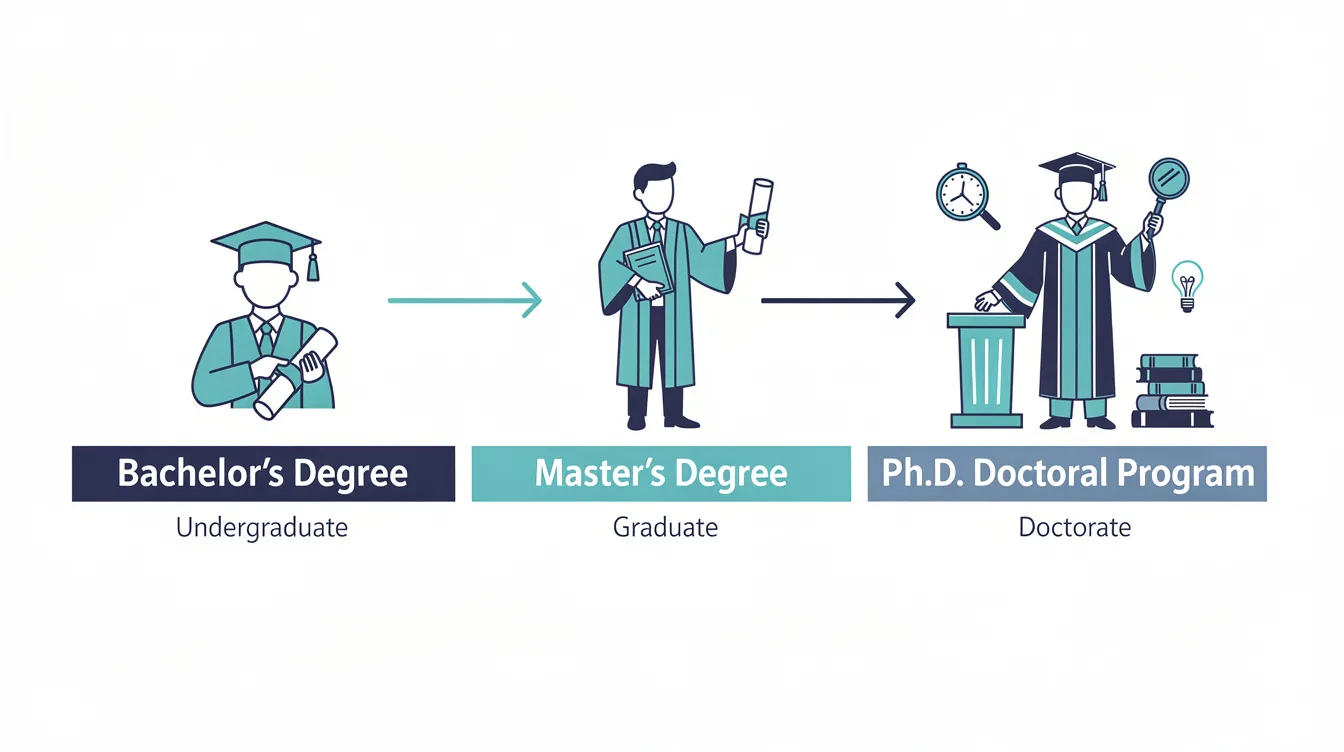
To pursue a Ph.D., candidates typically must first obtain a bachelor’s degree, which serves as the foundational qualification for advanced academic study. In most countries, holding a bachelor’s degree is a prerequisite for admission into graduate research programs, including doctoral studies.
Many Ph.D. programs also require or strongly prefer applicants to have completed a master’s degree, which is another type of advanced degree. A master’s degree or its equivalent not only strengthens a candidate’s eligibility but also provides essential research experience and academic preparation for doctoral-level work. Both master’s and doctoral degrees are considered advanced degrees, and the progression from a bachelor’s degree to a master’s degree, and then to a Ph.D., is common in many educational systems.
Some institutions offer direct-entry doctoral programs for exceptional students, allowing them to transition from a bachelor’s degree directly into a Ph.D. program without first earning a master’s degree. However, these pathways are less common and often have more rigorous admission requirements.
The typical time commitment for a Ph.D. program is 4-7 years, while a master’s program usually takes 1-2 years to complete.
How to Apply to a Doctoral Program
When preparing your application materials for a Ph.D. program, it is important to gather all required documents. An application package for a PhD program typically includes a research proposal (sometimes referred to as a dissertation proposal), letters of recommendation, transcripts, and a personal statement. Many programs require a dissertation proposal or research proposal as part of the application or as an early milestone in the PhD program.
Contact potential doctoral advisors to discuss your research interests and ensure alignment with their expertise. This can strengthen your application and help you refine your research or dissertation proposal.
Request recommendation letters from academic or professional contacts who can speak to your qualifications and readiness for advanced study in a PhD program.
The PhD Journey: Coursework, Comprehensive Exams, and Doctoral Study

The typical timeline for a Ph.D. program varies, as many programs have different structures and requirements depending on the country, university, and field of study. Many doctoral candidates begin their journey by enrolling in required coursework, which is a standard expectation in the US, Canada, India, Sweden, and Denmark, where many universities require coursework in addition to research for PhD degrees.
Coursework and Seminars
Throughout the program, many PhD students and doctoral candidates worldwide engage in advanced research, participate in seminars, and develop their thesis topics under faculty supervision. Coursework provides foundational knowledge and research skills necessary for advanced study.
Comprehensive Exams
As part of the process, most PhD programs require students to complete comprehensive exams before they can advance to candidacy. These exams assess a student’s mastery of their field and readiness to undertake independent research.
Advancing to Candidacy
After passing comprehensive exams, students are formally recognized as PhD candidates and focus primarily on their dissertation research and writing.
Planning and Conducting Independent Research
To successfully plan and conduct independent research during your PhD journey, follow these steps:
-
Develop a Clear Research Project Proposal: Outline your research questions, methodology, and the role of data analysis in conducting original research and evaluating your findings.
-
Secure Ethics Approval: Obtain necessary ethics approval early to avoid delays in your research timeline.
-
Schedule Regular Advisor Meetings: Meet regularly with your advisor to discuss progress, address challenges, and receive feedback that supports your problem-solving and communication skills.
-
Document Research Methods Thoroughly: Keep detailed records of your research methods, which will strengthen your dissertation and help refine your data analysis techniques.
Dissertation, Doctoral Study, and Final Defense

When preparing your Ph.D. dissertation, it is important to outline a clear draft structure that meets your university’s requirements. Faculty members, who are often experts in your field, play a crucial role in advising you throughout the research process and may serve on your dissertation defense committee. They are responsible for evaluating your research and approving your final work.
Dissertation Research
Ph.D. students are required to submit regular progress reports and must defend their thesis in an open defense, known as a viva voce, in some countries. A viva voce is an oral examination where the Ph.D. candidate presents and defends their findings before a committee of experts, which typically includes faculty members.
Preparing for the Final Defense
Be sure to prepare thoroughly for your oral defense, addressing potential questions and feedback from the faculty committee. After a successful defense, submit your final manuscript according to your university’s rules and guidelines.
Funding, Financial Aid, and Cost Considerations for PhD Degrees

Common funding sources for Ph.D. students include research assistantships, teaching assistantships, fellowships, scholarships, and grants. Many Ph.D. programs, especially in STEM and humanities fields, guarantee funding for all admitted students, which often includes a tuition waiver and an annual stipend. Funding can come from university sources, government-funded Research Councils, or private foundations.
Many Ph.D. students work as teaching assistants or research assistants to help fund their studies. These positions not only provide financial support but also valuable experience in research and teaching. Ph.D. candidates may also apply for fellowships that offer additional financial support during their studies. However, some students may still need to take on debt to complete their degree.
To secure funding, students often need to demonstrate research ability and may be required to pass qualifying exams. It is important to apply for assistantships and fellowships early and to prepare a funding timeline to ensure continuous support throughout your Ph.D. program.
Career Outcomes After a PhD Degree in Higher Education and Beyond
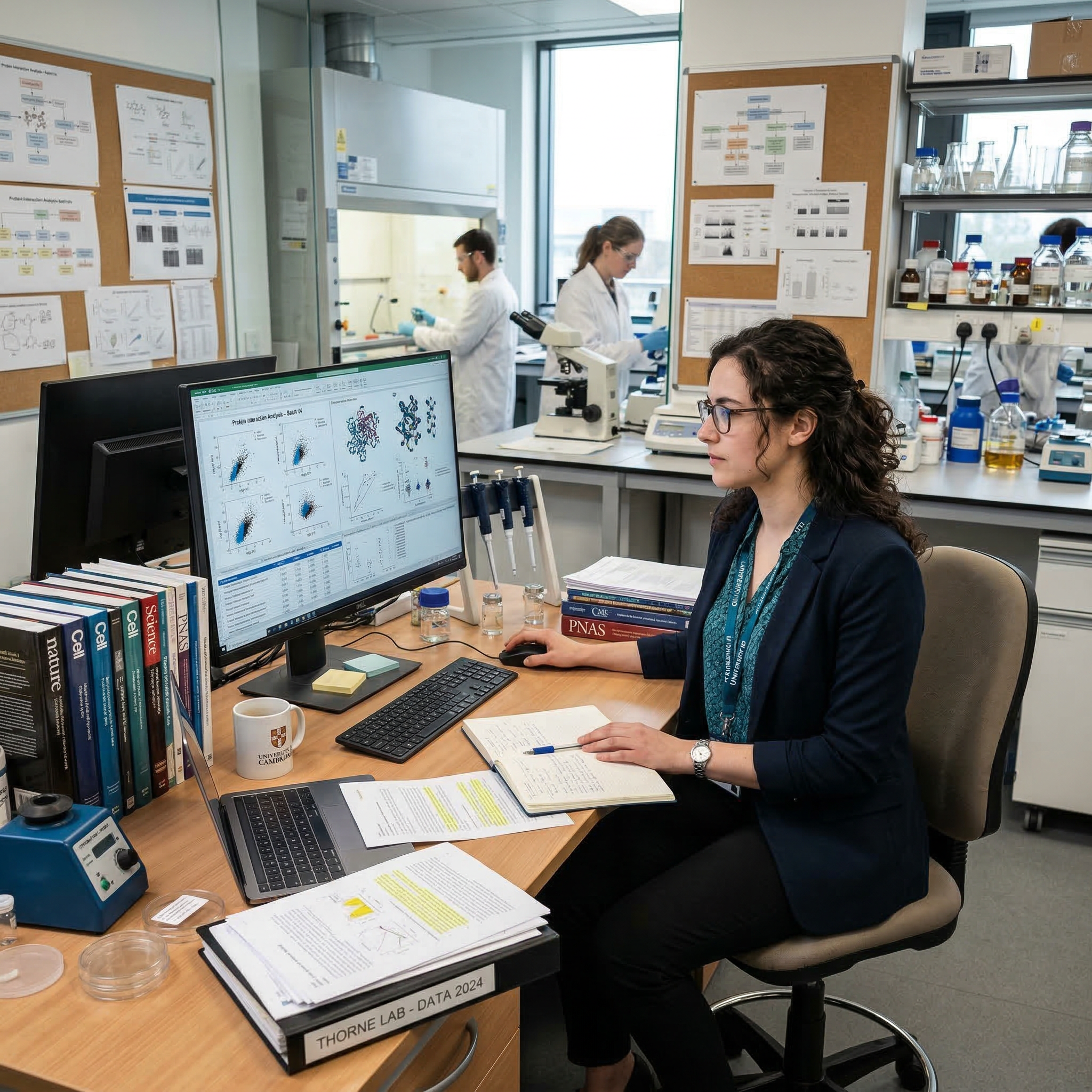
PhD holders often teach at universities, colleges, and schools, taking on academic roles that combine instruction with research and specialized expertise. In addition to academic careers, PhD graduates can pursue leadership, managerial, research, academic, and consulting positions across various industries. These advanced qualifications open doors to diverse opportunities beyond traditional academia.
PhD graduates typically command higher salaries and have lower unemployment rates compared to those with lower degrees, making the investment in a PhD valuable for long-term career prospects.
To maximize your career options, explore industry research roles and build your professional network early.
Comparing a PhD Degree to Other Doctorate Degrees
When exploring doctoral degrees, it’s important to understand how a PhD compares to other doctorate degrees in terms of goals, focus, and outcomes. Below is a comparison table highlighting these differences:
|
Degree Type |
Educational Goal |
Research Emphasis |
Career Outcomes |
|---|---|---|---|
|
PhD (Doctor of Philosophy) |
Advance knowledge through original research |
Strong focus on independent, original research and theory development |
Academic careers, research positions, and specialized professional roles |
|
Professional Doctorate (e.g., EdD, DBA, PsyD) |
Apply existing knowledge to practical problems |
Emphasis on applied research and real-world problem solving |
Leadership roles, professional practice, and applied research positions |
|
PhD degrees emphasize rigorous research, requiring candidates to conduct independent research projects that contribute new knowledge to their field. In contrast, professional doctorates focus more on applying research to practical challenges within professional settings, often combining coursework with applied projects. |
Is a PhD Right For You? Evaluating Readiness for Doctoral Study
Deciding to pursue a PhD is a significant commitment that requires careful consideration of your interests, goals, and readiness. Here are some key points to evaluate:
-
Interest in Independent Research: A PhD program typically involves conducting independent, original research. Assess whether you are passionate about exploring complex questions and contributing new knowledge in your field.
-
Career Goals: Consider how a PhD aligns with your long-term career objectives. If your goals include academic positions, research roles, or specialized professional careers, a PhD may be beneficial.
-
Return on Investment: Pursuing a PhD often requires several years of intensive study and research. Evaluate the potential career benefits against the time, financial costs, and personal commitment involved.
-
Seek Insights: Talk to current doctoral students, alumni, and faculty to gain insights into the demands and rewards of doctoral study in your field.
Timeline: How Long Does a PhD Take
The duration of a PhD program varies depending on the discipline, country, and institution. Below is a typical timeline outlining key milestones:
|
Phase |
Typical Duration |
Key Activities |
|---|---|---|
|
Years 1-2 |
1-2 years |
Completion of required coursework, development of research proposal, preparation for comprehensive exams |
|
Year 2-3 |
1 year |
Passing comprehensive exams, advancing to PhD candidacy, beginning focused independent research |
|
Years 3-5+ |
2-3+ years |
Conducting original research, data analysis, dissertation writing |
|
Final Year |
1 year |
Submission of dissertation, preparation for oral defense (viva voce), successful defense before a committee |
|
Some fields, such as the biological sciences or engineering, may have structured lab work that influences the timeline, while humanities or social sciences may have more flexible schedules. Overall, PhD programs typically range from four to seven years. |
Common Admissions Requirements and Preparation Tips
Admission to a PhD program is competitive and requires thorough preparation. Common requirements and tips include:
-
Academic Background: A bachelor’s degree is required, and many programs also require a master’s degree or equivalent advanced coursework.
-
Research Experience: Strengthen your application by gaining research experience through assistantships, internships, or independent projects.
-
Writing and Analytical Samples: Prepare strong writing samples or research proposals that demonstrate your analytical and critical thinking skills.
-
Standardized Tests: Some programs require GRE or other standardized test scores; check specific program requirements and prepare accordingly.
-
Letters of Recommendation: Secure recommendations from academic or professional mentors who can attest to your research potential and academic abilities.
-
Personal Statement: Craft a clear statement outlining your research interests, career goals, and motivation for pursuing a PhD.
FAQs About PhD Degrees and Doctoral Study
Q: What is the difference between a PhD and other doctorates?
A: A PhD focuses on original research and theory development, while professional doctorates emphasize applying research to practical problems.
Q: Do PhD holders use the title “Doctor”?
A: Yes, PhD holders are entitled to use the title “Doctor” and may use post-nominal letters such as PhD or DPhil, depending on their institution.
Q: Are PhD programs fully funded?
A: Many PhD programs, especially in STEM and humanities fields, offer funding packages including tuition waivers and stipends through teaching or research assistantships.
Q: What is a dissertation proposal?
A: It is a document outlining your planned research, including questions, methodology, and significance, typically required early in the PhD program.
Q: Is the dissertation defense public?
A: This varies by country and institution; some hold open defenses (viva voce), while others conduct them privately.

PhonyDiploma.com: Replica Degrees, Novelty Certificates, and Legal Disclaimers
PhonyDiploma.com offers high-quality replica degrees and novelty certificates designed for entertainment, decorative use, or as unique gifts. These replica diplomas mimic the appearance of authentic academic credentials, featuring raised seals, watermarks, and realistic paper textures to enhance their look and feel.
Legal Disclaimer: All replica degrees and certificates sold by PhonyDiploma.com are clearly marked as novelty items and are not valid for academic, professional, or legal purposes. They are intended solely for entertainment and decorative display.
Product Security Features: Our replica diplomas include detailed design elements such as raised seals, embossed lettering, and official-style signatures to ensure a realistic presentation, similar to how our fake certificates designed to look just like the real thing closely match genuine documents.
Customization and Ordering: Customers can select from a wide range of diploma templates, other documents, and accessories and customize names, dates, and other details online. Orders are processed quickly and shipped